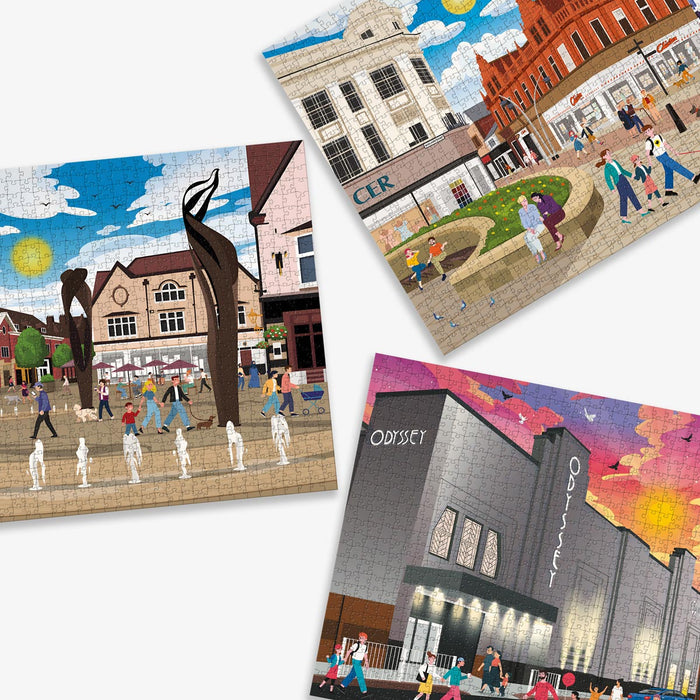
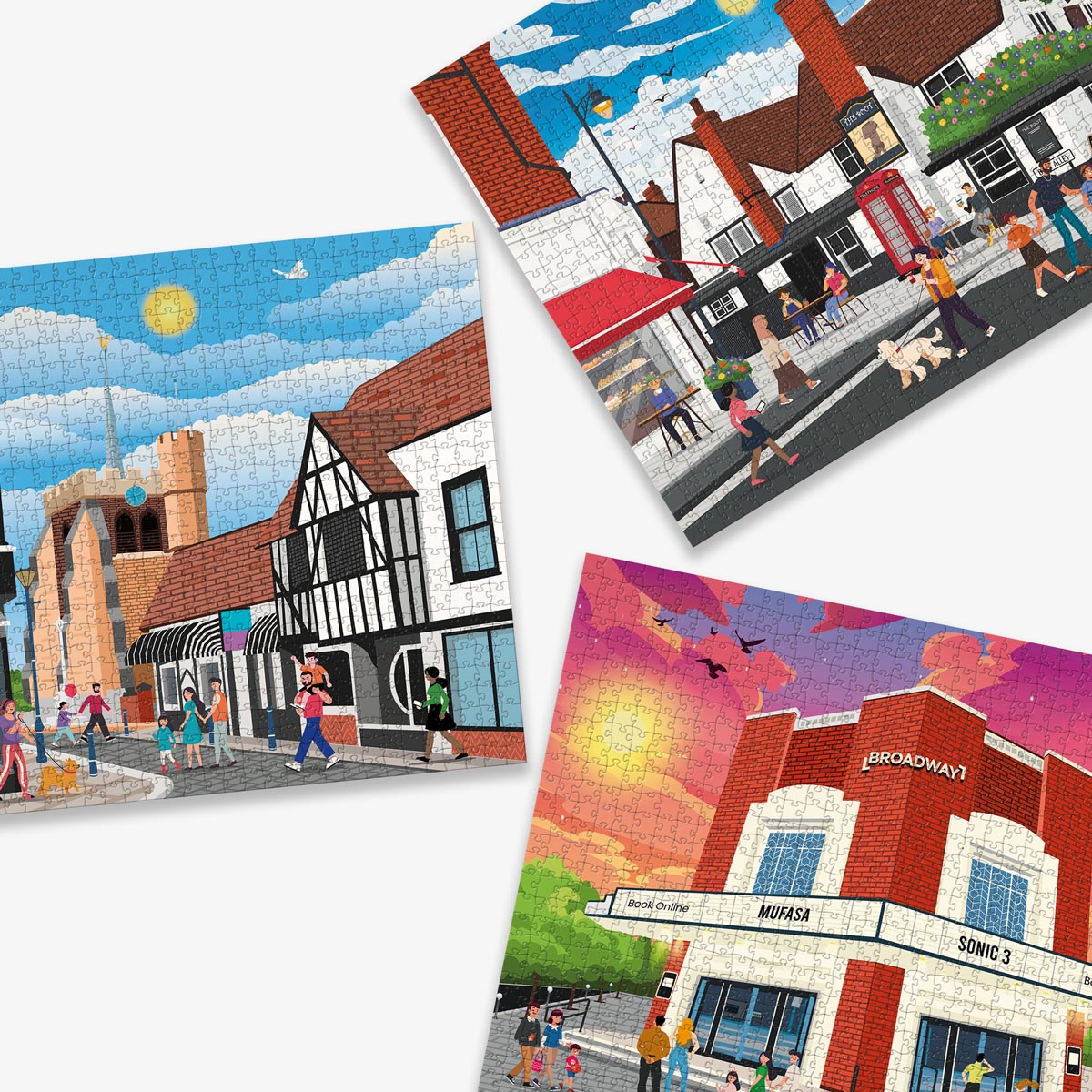
How to Set Up Before You Begin
Before you even place your first piece, a good setup can make a huge difference to how enjoyable your puzzle experience feels. At our Local Puzzle events, we often see beginners struggle not because the puzzle is too hard — but because they simply don’t have a comfortable or organised space to work in.
Getting this part right removes frustration and helps you feel relaxed from the very beginning.
Create a Comfortable Puzzle Space
Start by choosing a flat surface where you can leave your puzzle out for a while. A dining table, desk, or even a large tray works well.
Ideally, you want:
- Good lighting (natural light is best, but a lamp works too)
- Enough space to spread pieces out
- A quiet or relaxed environment where you won’t feel rushed
Puzzling works best when it doesn’t feel like a “task”. Think of it more like a calm activity you can dip in and out of rather than something you need to finish in one sitting.
Sort Before You Start
One of the simplest ways to make puzzling easier is to sort your pieces before you begin. This is something we always recommend to beginners at our events.
Start with:
- Edge pieces (flat sides)
- Bright or obvious colours
- Recognisable patterns or text
You don’t need to over-organise — even a basic separation makes a big difference. It helps your brain break the puzzle into smaller, more manageable sections rather than one overwhelming whole.
Set the Right Mood
This might sound small, but it matters more than people realise. Puzzling is meant to be calming, so set the tone accordingly.
Many beginners enjoy:
- A cup of tea or coffee nearby
- Soft background music or a podcast
- A relaxed, unhurried mindset
The more comfortable you are, the more enjoyable the experience becomes. When setup feels easy and calm, the puzzle itself instantly feels more approachable.
How to Start Solving a Jigsaw Puzzle Step-by-Step
Once your space is set up and your pieces are sorted, the next stage is where everything starts to click into place — quite literally. This is the part of how to start jigsaw puzzles that most beginners overthink, but in reality, it’s just about following a few simple, repeatable steps.
At our Local Puzzle events, we always reassure first-timers: you don’t need a strategy degree to do a puzzle. You just need a calm approach and a bit of patience.
Step 1: Start with the Border
The easiest and most logical place to begin is always the edge pieces. These are the ones with a flat side, and they instantly give you a frame to work within.
Building the border first does two important things:
- It gives you structure and a clear starting point
- It makes the puzzle feel instantly more manageable
Think of it as drawing the outline before colouring in the picture.
Step 2: Look for Obvious Sections
Once the border is done, don’t try to solve everything at once. Instead, look for small, recognisable areas of the image.
These might include:
- Buildings or landmarks
- Words or signage
- Bright or distinct colour blocks
- Unique shapes or patterns
Focusing on small wins helps build momentum and confidence early on.
Step 3: Match by Colour and Shape
Now start grouping pieces based on what you can see. You don’t need to force connections — just let patterns guide you.
For example:
- Blues might belong to the sky or water
- Greens could be trees or fields
- Repeated textures often belong in the same section
This step is less about perfection and more about reducing chaos into smaller, more workable groups.
Step 4: Work Slowly and Let It Build
One of the biggest beginner misconceptions is that puzzles should come together quickly. In reality, puzzling is meant to be slow and steady.
Some pieces will fit immediately. Others will take time. That’s completely normal.
The key is to:
- Stay patient
- Don’t rush decisions
- Enjoy the gradual progress
At our events, we often see people relax the moment they stop trying to “finish” and start simply enjoying the process.
Step 5: Step Back Often
A surprisingly helpful tip is to occasionally pause and look at the puzzle from a distance. This helps your brain see patterns you might miss up close.
Even a short break can:
- Refresh your focus
- Help you spot new connections
- Make the whole experience feel less intense
Puzzling isn’t about constant effort — it’s about returning with fresh eyes.
Step 6: Enjoy the Process, Not Just the Finish
The final piece is satisfying, but the real enjoyment comes from everything leading up to it. Each small connection is a mini achievement.
If you’re learning how to do jigsaw puzzles, this is the most important mindset shift:
it’s not about finishing quickly — it’s about enjoying each step as it comes together.

The Biggest Beginner Mistakes We Hear at Events
One of the advantages of in-person events is that we get to hear what helps beginners enjoy puzzling — and what unintentionally makes it harder than it needs to be. The good news is that most “mistakes” are completely normal, and once you know them, they’re easy to avoid.
If you’re learning how to start jigsaw puzzles, this section will save you a lot of early frustration.
1. Choosing a Puzzle That’s Too Difficult
This is by far the most common mistake. Many beginners are drawn to large, detailed 1000-piece puzzles because they look impressive — but they can quickly feel overwhelming if it’s your first experience.
Starting too difficult often leads people to think:
“I’m not good at this”
When in reality, the puzzle is just not the right starting point. Smaller, clearer designs build confidence much faster and make the whole experience enjoyable from the beginning.
2. Trying to Rush the Process
Another common mindset is treating puzzling like something that needs to be finished quickly. In reality, jigsaw puzzles are the opposite — they’re designed to be slow, calming, and absorbing.
When beginners rush, they often miss simple visual clues and become frustrated. The most successful puzzlers are usually the most patient ones.
3. Not Sorting Pieces First
Jumping straight into trying to “find fits” without sorting pieces is a quick way to feel overwhelmed.
Even a simple separation of:
- edges
- colours
- obvious patterns
can completely change the experience. It turns chaos into something structured and manageable.
4. Expecting Every Piece to Fit Easily
At the start, many people assume pieces will naturally fall into place. But puzzling always involves trial, error, and revisiting sections later.
It’s completely normal to:
- try a piece and remove it again
- leave gaps unfinished
- come back to sections later
Understanding this early removes a lot of unnecessary frustration.
5. Giving Up Too Soon
We often see beginners walk away just before they reach the most enjoyable part — when patterns start to click and progress accelerates.
Puzzles almost always have a “breakthrough moment” where everything suddenly becomes easier. The key is simply sticking with it long enough to reach that point.
The Main Takeaway
Every one of these “mistakes” is part of learning. Nobody starts as an expert puzzler — and you’re not supposed to.
Once you understand what to expect, how to start jigsaw puzzles becomes far less intimidating and far more enjoyable. It’s not about getting it right immediately — it’s about giving yourself permission to learn, slow down, and enjoy the process.
Why Local Puzzles Are Easier (and More Enjoyable) for Beginners
One thing we’ve noticed again and again at Local Puzzle events is that beginners tend to enjoy puzzling far more when the image feels familiar. That’s where local puzzles have a natural advantage — they don’t just show a picture, they show somewhere you already know.
And when you’re learning how to start jigsaw puzzles, that familiarity makes a big difference.
Familiar Images Make Starting Less Overwhelming
When you’re faced with a brand-new scene, your brain has to work harder to understand what it’s looking at. But with a local town or landmark, something interesting happens — you already recognise parts of it.
A street, a building, a skyline, a park — these familiar elements give you instant reference points. Instead of staring at a random image, you’re thinking:
“I know where that is.”
That small shift makes the puzzle feel more approachable from the very beginning.
Recognition Helps You Find Pieces Faster
Beginners often struggle with knowing where to start, but familiarity helps guide decisions naturally.
For example:
- You can spot the cathedral in a St Albans puzzle
- You recognise the layout of a Hitchin high street
- You can identify key buildings or landmarks in seconds
This reduces guesswork and makes it easier to group pieces into meaningful sections early on.
Emotional Connection Keeps You Motivated
One of the biggest challenges for beginners isn’t difficulty — it’s staying motivated.
When a puzzle shows a place you care about, you’re more likely to keep going. Each piece feels like it has meaning, not just function. You’re not just completing an image — you’re rebuilding a memory.
We often hear customers say things like:
“I didn’t want to stop because it reminded me of home.”
That emotional pull is powerful, especially when you’re still learning the basics.
Local Puzzles Naturally Encourage “Small Wins”
Because you already recognise the image, you’re more likely to spot early progress — a building taking shape, a street coming together, a skyline forming.
These small wins are crucial for beginners. They build confidence and make the puzzle feel achievable, rather than overwhelming.
A More Enjoyable First Experience Overall
Ultimately, the first puzzle experience sets the tone for everything that follows. If it feels too difficult or confusing, people often assume puzzling isn’t for them.
But when the image feels familiar and meaningful, everything changes. The process becomes more engaging, more intuitive, and far more enjoyable.
That’s why local puzzles are often the perfect starting point — they don’t just teach you how to start jigsaw puzzles, they make you want to keep going.
The Real Reason People Fall in Love with Puzzling
At our Local Puzzle events, we often see something happen that surprises people the first time they try it. They arrive unsure, sometimes even sceptical… and leave saying some version of the same thing:
“I didn’t expect to enjoy that so much.”
And that’s really the key to how to start jigsaw puzzles successfully — because once you begin, it’s rarely about the puzzle itself. It becomes about how it makes you feel.
It Quietly Slows Everything Down
Modern life is fast. Constant notifications, busy schedules, and endless scrolling leave very little room to simply pause. Puzzling forces a different rhythm.
There’s no urgency. No deadlines. Just one small decision at a time. That natural slowing down is often what people fall in love with first — even before the puzzle is finished.
It Feels Surprisingly Mindful
Without trying to be, jigsaw puzzles naturally create a mindful state. You focus on shapes, colours, and small details. Your attention narrows in a calm, steady way.
For many beginners, this is the first time in a while they’ve been fully absorbed in something without distraction. It’s not about escaping life — it’s about stepping into a calmer version of it.
It Creates Small, Constant Wins
Unlike many hobbies where progress feels slow or invisible, puzzling gives you constant feedback.
A piece fits. A section forms. A corner comes together. Each small win releases a sense of satisfaction that keeps you going without pressure.
This steady progress is one of the biggest reasons people keep coming back to puzzles after their first try.
It Naturally Brings People Together
Even though puzzling can be done alone, it often becomes a shared experience. Families gather around tables, conversations start naturally, and people begin working together without planning it.
At our events, we regularly see strangers collaborate on sections — talking, laughing, and celebrating when something finally clicks into place.
It’s simple, but it’s powerful.
It Connects You to Memory and Meaning
When the puzzle is of a familiar place — a town, a landmark, a street you know — it becomes more than just an activity. It becomes a reminder of where you’ve been and what you’ve experienced there.
That emotional layer is often what turns first-time puzzlers into lifelong ones. It stops being about finishing a picture and starts being about reliving something personal.
The Real Reason People Stay
People don’t fall in love with puzzling because it’s difficult or competitive. They fall in love with it because it’s calm, satisfying, and grounding.
It gives you space to think. Space to slow down. Space to simply be present.
And once you experience that, even just once, it changes how you see it forever.
Conclusion: You Don’t Need to Be “Good” at Puzzles to Start
If there’s one message we hope comes across from everything we’ve learned at our Local Puzzle events, it’s this: you don’t need to be “good” at jigsaw puzzles to enjoy them — you just need to start.
So many people arrive saying they’re unsure, or that they wouldn’t know where to begin. But once the first few pieces go down, something shifts. The process stops feeling intimidating and starts feeling enjoyable, calming, even a little addictive in the best possible way.
When learning how to start jigsaw puzzles, the most important thing is not speed or skill — it’s simply giving yourself permission to begin slowly. Choose a manageable puzzle, take your time, and let the image come together piece by piece.
There will be moments of trial and error. There will be sections that take longer than expected. But that’s all part of it. Puzzling isn’t a test — it’s an experience.
And for most people, that first completed puzzle is what changes everything. It builds confidence, sparks curiosity, and often leads to the same realisation we hear again and again at our events:
“I didn’t think I’d enjoy this… but I really did.”
So if you’ve been thinking about trying it, don’t overthink it. You don’t need experience. You don’t need strategy. You just need a puzzle, a bit of time, and the willingness to start with one piece.
Because once you do, you might just discover a hobby that stays with you far longer than you expected.